
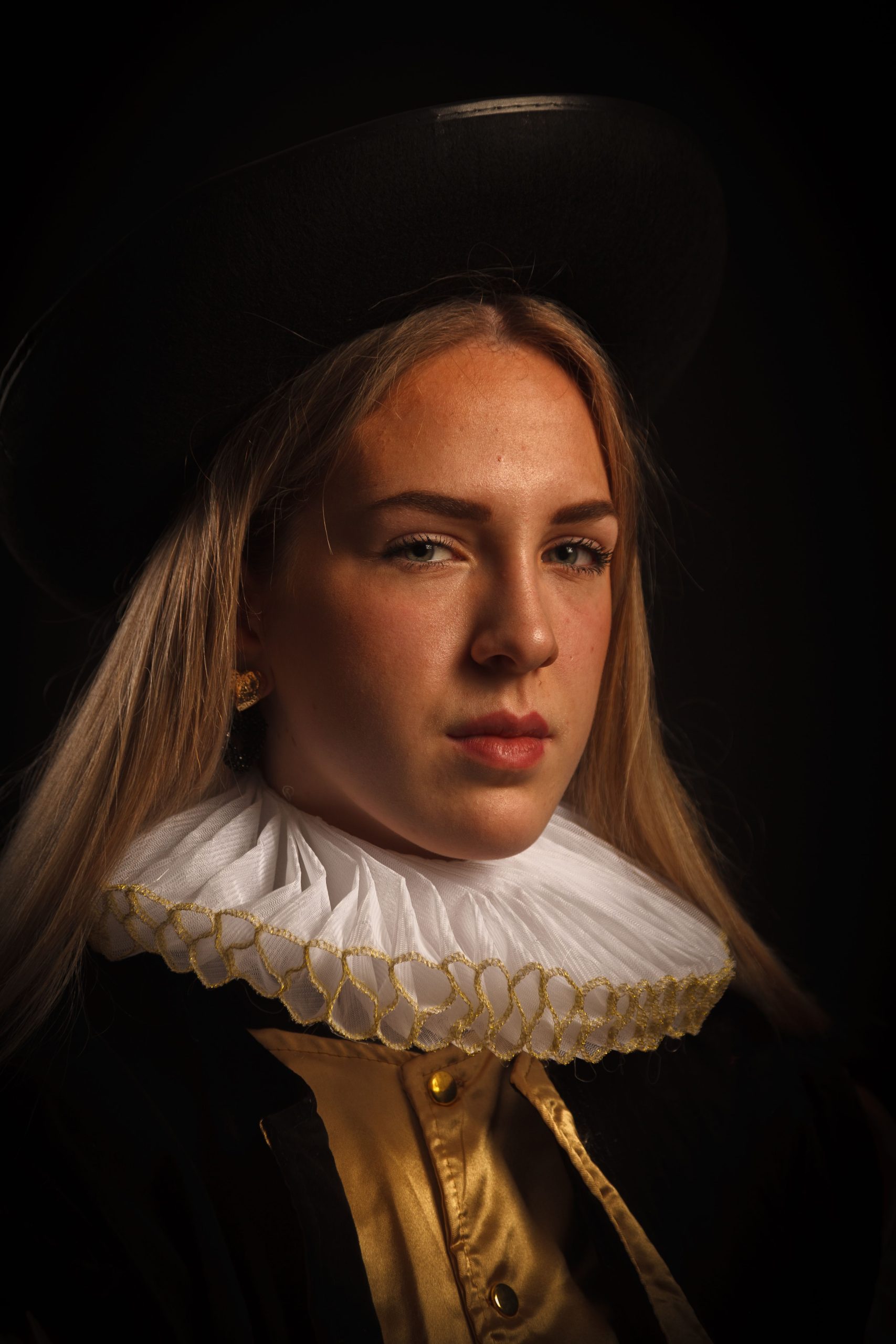
Here is a fact that surprises almost everyone the first time they hear it: for about a hundred years, “courtesan” was a man’s word. It meant a courtier – someone who worked, schemed, and angled for favor inside a royal or papal court.
Then, over roughly one decade in the early 1500s, the feminine form of that same word slid sideways into meaning something else entirely, and it never slid back.
That is not a minor dictionary footnote. It is a compressed case study in how language treats women differently from men, using the exact same root, the exact same grammar, and a gap of only a few years.
I think it is one of the more useful words in English precisely because you can watch the shift happen in the historical record, almost in real time, which is rare.
Where the word actually comes from
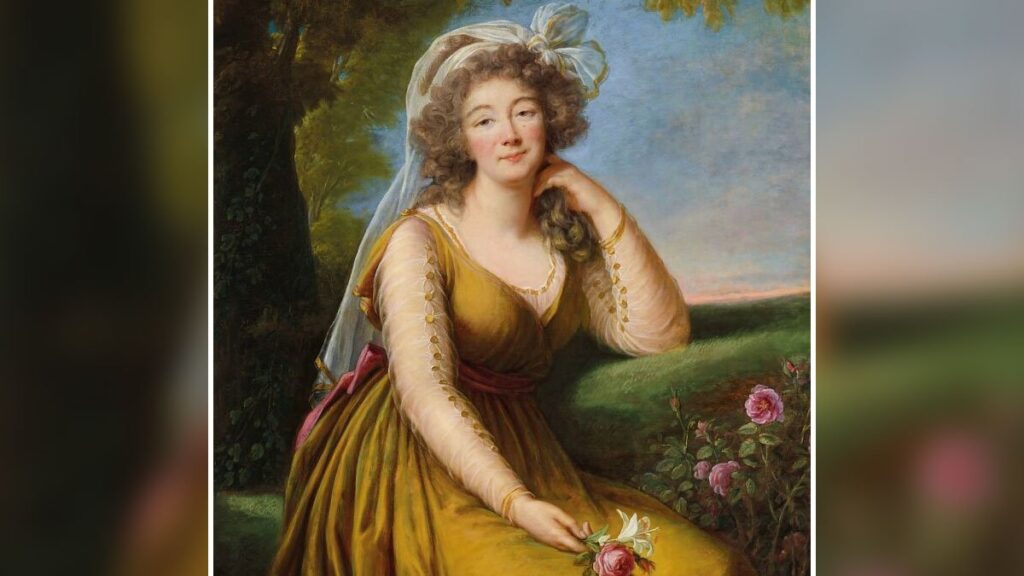
Start with the plumbing. English borrowed “courtesan” from French courtisane, which came from Italian cortigiana – the feminine of cortigiano, “one attached to a court.”
That in turn traces back to corte, “court,” and further back to Latin cortem, from cohors (an enclosed yard, and by extension the people assembled in it – a company, a retinue). It’s the same Latin root that gives us “cohort.”
According to the Online Etymology Dictionary, English actually had two separate borrowings: a masculine one from the early 1400s meaning simply “a courtier, a member of the papal curia,” and a later one from the 1540s, via the feminine Italian form, meaning “a prostitute.”
Same court. Same root. Two different centuries, two very different destinations.
The decade everything changed

Italian etymological dictionaries let you date the slide almost year by year. Sources compiled by the Osservatorio degli Italianismi nel Mondo, drawing on the GRADIT, DELI, and LEI dictionary databases, place the neutral sense “lady of the court” at 1524, a softer Renaissance sense – “a woman of free habits, often cultured and refined” – at 1526, and the outright euphemism for “prostitute” at 1534. Ten years, three meanings.
The written record backs this up with something even more specific: a diary entry. Johannes Burchard, Master of Ceremonies to Pope Alexander VI, wrote in April 1498 about “quedam cortegiana, hoc est meretrix honesta” – “a certain courtesan, that is, an honest prostitute.”
In October 1501 he described fifty of these women dining with Cesare Borgia inside the Apostolic Palace itself, as documented by historian Arturo Graf and analyzed at length in Eugenio Giusti’s study The Renaissance Courtesan in Words, Letters and Images.
By 1517, a Roman census was formally sorting women into “cortesana onesta” (honest courtesan) and “cortesana da lume o da candela” (candlelight courtesan) – a bureaucratic tier system for what was, on paper, an already-compromised word doing double duty.
It’s worth pausing on how strange that phrase “honest prostitute” actually is. It is not a euphemism trying to hide something; it’s a euphemism openly announcing the thing it’s hiding, right in the same breath. That contradiction is basically the whole story of this word in miniature.

Venice kept a catalogue. Literally.
If you want scale rather than anecdote, Venice obliges. Around 1565, an anonymous, mildly scandalous pamphlet called Il catalogo di tutte le principal et più honorate cortigiane di Venezia (“The Catalogue of All the Principal and Most Honored Courtesans of Venice”) circulated in the city.
According to a detailed mapping of the document published in the History Journal, it listed 212 women across 210 entries (two were shared listings for sisters), plus 128 go-betweens, each with a name, a district, and a price ranging from “give whatever you like” up to 30 scudi. Nearly half were concentrated in the Cannaregio district.
Here’s the detail that undercuts the romantic version of this story: of the 210 individually priced entries, 79 charged just one scudo and 56 charged two, according to analysis by History Walks in Venice.
That means roughly two-thirds of even this “elite” registry were priced far below the glamorous image of the cultured courtesan holding court with princes.
The famous names were the visible exception, not the norm – a small, loud minority whose reputation did the marketing for everyone else.
The women the word was actually built around
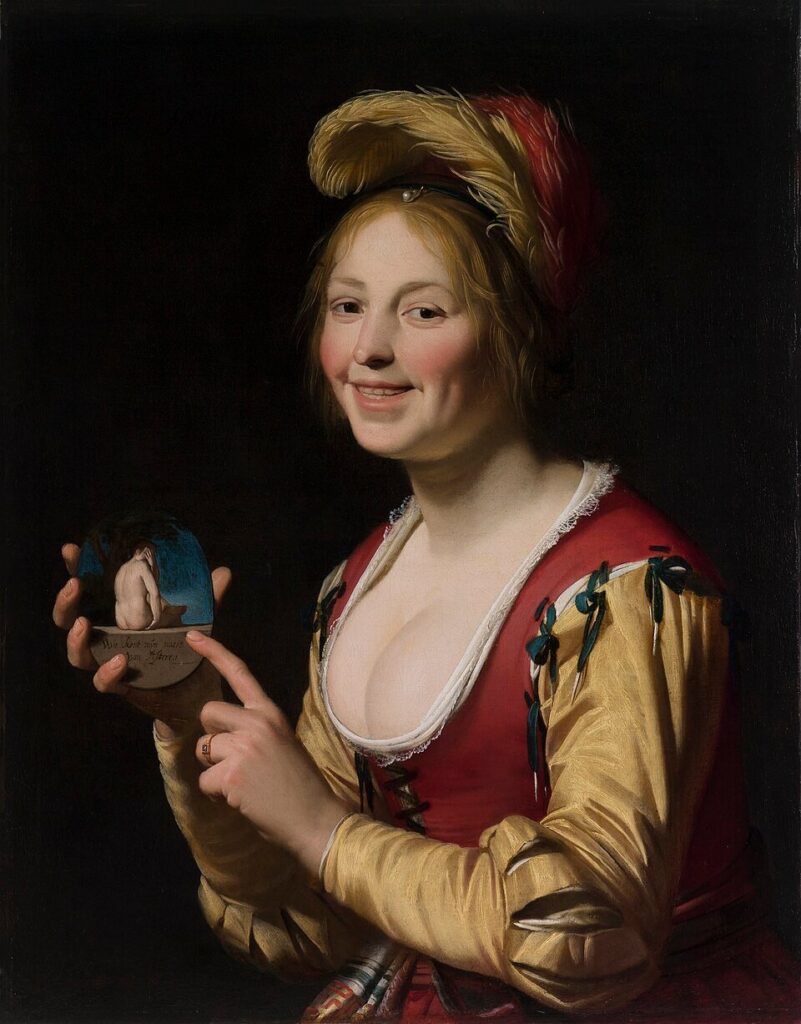
The exceptions matter, though, because they’re the reason the “honest courtesan” category existed at all. Veronica Franco (c. 1546–1591) is the clearest case.
Trained by her own mother, who was also a courtesan, Franco received a humanist education alongside her brothers, was listed in the 1565 Venetian catalogue at around age twenty, and went on to publish two books – Terze rime (1575) and Lettere familiari a diversi (1580), the latter including a letter to King Henry III of France. She joined the literary salon of patrician Domenico Venier, survived the plague of 1575–77, and in 1580 stood trial before the Venetian Inquisition on charges of witchcraft – and was acquitted. Historian Margaret Rosenthal’s biography of her is titled, tellingly, The Honest Courtesan.
Tullia d’Aragona, active in Rome and Florence in the same period, is the other standard example.
She published a Neoplatonic philosophical dialogue on love in 1547 – one of the first of its kind written by a woman – and in 1546 Duke Cosimo I de’ Medici formally exempted her from Florence’s sumptuary law requiring courtesans to wear a yellow identifying veil, citing her “rare knowledge of poetry and philosophy,” according to the Dizionario Biografico degli Italiani.
That exemption is worth sitting with: an entire legal category built to visually mark and separate these women, and a specific individual carved out of it by decree, because she was too accomplished to be filed under the ordinary label.
My honest read on this is that the “honest courtesan” tier wasn’t really a mark of respect.
It was a moral escape hatch – a way for powerful men to keep enjoying educated, sophisticated female company without having to change how the underlying category was policed, taxed, and named.
Giving Veronica Franco and Tullia d’Aragona their own subcategory let the culture praise two exceptional women while leaving the word, and everyone else it applied to, exactly where it was.
Not every historian is as charitable to the romantic version as popular retellings tend to be, either.
Eugenio Giusti argues directly against the older reading (from 19th-century historian Arturo Graf) that Renaissance Italians maintained clean, respected distinctions between tiers of courtesan – Giusti reads the coexistence of terms like “cortesana onesta” in the same 1517 census as evidence of a society “unable to establish distinctions and avoid misunderstanding,” not one that had made peace with them.
Historian Lisa Jardine goes further still, describing the broader “learned lady” figure of the Renaissance in the Historical Journal as something historians have often treated with “fondly indulgent” sentimentality rather than serious scrutiny of what these women actually achieved.

This isn’t just one word doing this
What makes “courtesan” genuinely useful, rather than just a piece of trivia, is that it’s not alone. Linguist Muriel Schulz described this pattern in a widely cited 1975 essay, arguing that “again and again in the history of the language, one finds that a perfectly innocent term designating a girl or woman may begin with totally neutral or even positive connotations, but that gradually it acquires negative implications… becoming abusive and ending as a sexual slur.” Linguists sometimes call it semantic derogation, or pejoration, and it has a habit of hitting the female half of a word pair while leaving the male half untouched.
| Masculine term | Feminine counterpart | What happened to the feminine form |
|---|---|---|
| Courtier | Courtesan | Narrowed from “court attendant” to a euphemism for a paid mistress |
| Lord | Lady | Retains formal respect, but “lady” alone has been softened into a generic, sometimes dismissive term for any woman |
| Sir | Madam | Now doubles as slang for a brothel-keeper |
| Master | Mistress | Shifted from “female head of household” to “a man’s illicit lover” |
| Governor | Governess | Downgraded from an office of authority to a domestic employee |
Sources: pattern and pairing documented in academic work on gendered semantic derogation, including the University of Rzeszów’s overview of “Low Wenches and Slatternly Queans,” building on Schulz’s original 1975 essay in Language and Sex: Difference and Dominance.
Look down that list and the pattern is hard to unsee: whenever a word attaches a woman to power, money, or a man of status, English seems to eventually assume the attachment must be sexual and then, later, illicit.
I don’t think that’s a coincidence of history so much as a fairly reliable feature of how English has processed the presence of women near powerful institutions for the last five hundred years – and it’s worth asking, honestly, which of today’s gender-neutral-sounding words might be quietly midway through the same slide right now.
What “courtesan” is doing today

The word hasn’t retired. If anything, it’s had a small marketing revival. Merriam-Webster’s current entry defines a courtesan plainly as “a female sex worker with a courtly, wealthy, or upper-class clientele” – the euphemism has essentially become the dictionary definition.
Modern escort and companion services lean into the same historical prestige the word carried in Venice and Rome: the language of “discretion,” “sophistication,” and “companionship” rather than anything blunter.
A page for a München escort service, for instance, reads much closer to the vocabulary of a 16th-century patron describing a cortigiana onesta than to clinical or legal terminology – the same instinct that separated “honest” from “candlelight” five hundred years ago is still doing quiet work in how these services describe themselves now.
The euphemism treadmill hasn’t stopped trying to solve the same problem by relabeling it, either.
In June 2023, a brothel owner in rural Nevada formally petitioned her town council to replace the word “prostitute” with “courtesan” on official state work cards, arguing the older term carried needless stigma her employees didn’t deserve – a request one nearby county had already granted, according to reporting by Las Vegas ABC affiliate KTNV.
It’s a strange kind of full circle: a word invented in the 1500s specifically to soften “prostitute” is now, in 2023, being proposed as the softer replacement for the word that eventually replaced it.
I don’t think that petition fixes anything, for what it’s worth – swapping labels rarely changes how an occupation is treated once the new label starts doing the exact same job as the old one.
But it does confirm something about how durable this particular linguistic trick is. “Courtesan” survived four hundred years, an ocean crossing, and a language change, and it’s still being reached for as the word that makes something sound better than the plainer alternative.
What the word actually tells you
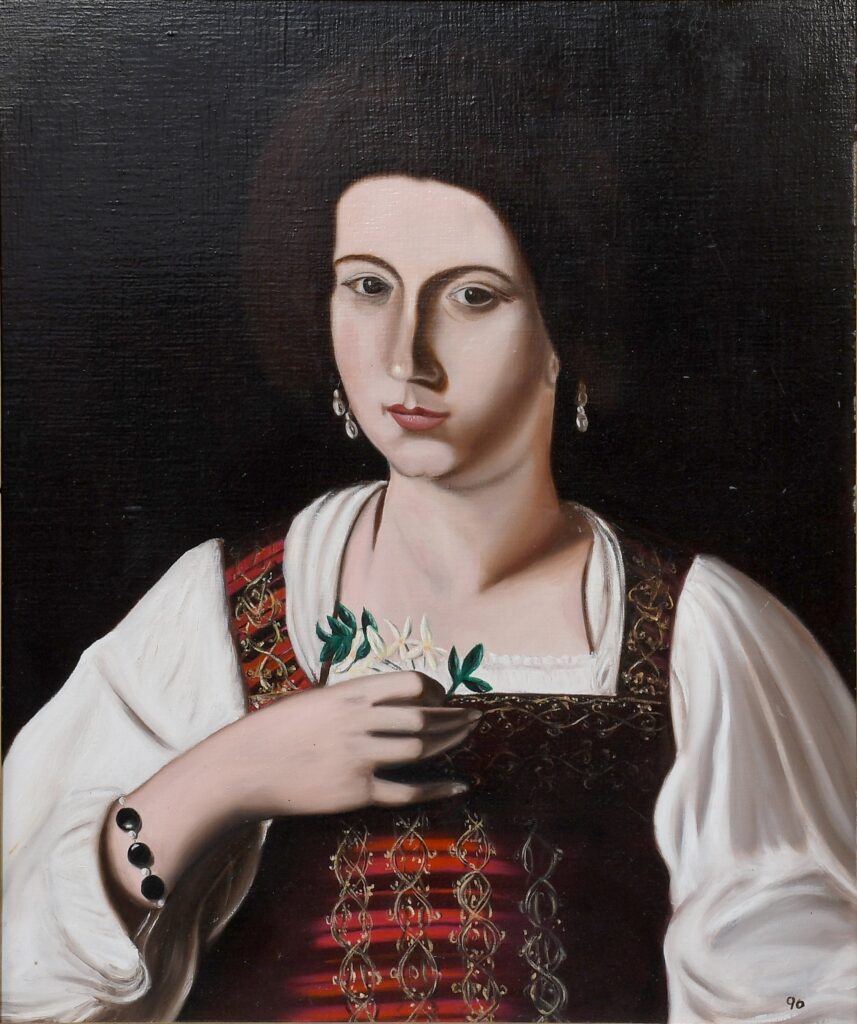
None of this is really about sex work, in the end. It’s about what happens to a word once it gets close enough to a woman’s proximity to money and power.
“Courtesan” started as a job title for a man in a hallway. It became, within a single decade, a euphemism doing moral cover work for a much messier reality, and it has stayed in that job ever since – dressed up differently depending on the century, but never actually retired.
If there’s a single lesson worth taking from tracing it this closely, it’s that etymology is rarely neutral history.
It’s a record of who got to define whom, and how quietly that definition can travel from a papal secretary’s diary in 1498 to a brothel’s paperwork in 2023 without most people ever noticing the trip.
How this article was put together: Etymological claims were checked against the Online Etymology Dictionary and Italian dictionary sources (GRADIT, DELI, LEI) compiled by the Osservatorio degli Italianismi nel Mondo.
Historical detail on Venice and Rome comes from Eugenio Giusti’s academic study of Renaissance courtesan terminology, the 1560s Venetian courtesan catalogue as analyzed by the History Journal and History Walks in Venice, and biographical sources on Veronica Franco and Tullia d’Aragona, including the Dizionario Biografico degli Italiani.
The linguistic pattern is drawn from Muriel Schulz’s 1975 essay on semantic derogation, cited via secondary academic sources since the original is not freely available online.
All URLs were retrieved in August 2026; dictionary definitions and news items are dated as cited above.